Have you ever noticed how money has this sneaky way of shaping our choices, even when we
think we’re making them freely? One of the biggest culprits is interest rates, though most people
don’t really talk about them until they’re face-to-face with a loan or a credit card bill. It’s almost
like the background noise of life—you don’t hear it until suddenly it’s turned up. The wild part is
that something as small as a few percentage points can change whether a dream feels
affordable or completely out of reach. That’s why, even if you’ve never cared for financial jargon,
interest rates are worth paying attention to, because they quietly play a role in almost everything
we buy, save, or plan for.
Think about how casual decisions connect to interest. You’re sitting with friends, debating
whether to order that extra round of dessert, and someone jokes about putting it on a card. It
seems harmless in the moment, but let that bill linger, and suddenly a slice of cake costs double
by the time interest piles on. On the other end of the spectrum, someone might drop money into
a savings account and forget about it, only to smile months later at how it’s grown—interest
working in their favor this time. Same word, same concept, completely different outcomes. That’s
what makes it both fascinating and tricky: it can be your best buddy or the houseguest who
overstays their welcome.
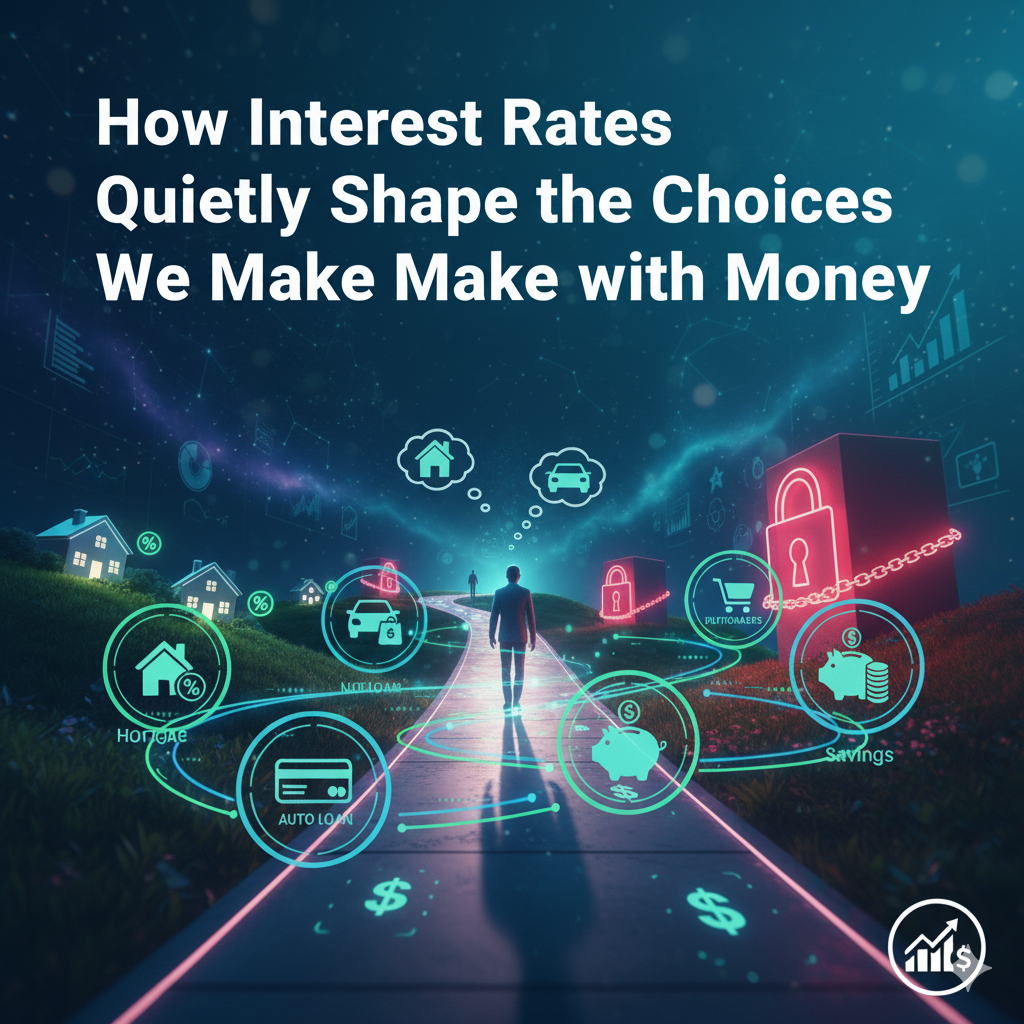
The vibe of interest rates also changes with the economy. When rates are low, life feels like a
clearance sale—loans are cheaper, people upgrade homes, buy cars, and generally act more
adventurous. There’s this unspoken optimism in the air, like everyone got a permission slip to go
after bigger plans. But crank rates higher, and suddenly people hold back, conversations turn
cautious, and dreams get put on hold. What’s cool is that this isn’t just theory—you can feel it in
the everyday chatter. A neighbor might say, “We’ll wait another year before moving.” A coworker
might laugh about skipping a renovation. These aren’t just personal choices; they’re reflections of
how interest rates tug at the strings of daily life.
Time is where interest really flexes its muscles. One quick decision—signing a loan contract,
swiping a card, choosing to save—doesn’t just live in the moment. It stretches out, sometimes for
years, echoing far beyond the day you made it. Student loans are a classic example: at eighteen,
the numbers don’t look too scary, but at thirty, you’re still feeling the weight of that choice. On the
flip side, patient saving when rates are on your side feels like planting seeds and watching them
grow over time into something surprisingly solid. Interest ties your today-self to your future-self
in ways you don’t always realize until the bills or the balances remind you.
What I love about thinking of interest this way is that it feels less like a math lecture and more
like a life lesson. It’s about balance. Borrowing isn’t bad; saving isn’t always easy; but knowing
the “cost of time” makes you wiser. If you can picture interest as a conversation between today
and tomorrow, suddenly the choices make more sense. Borrow too casually, and tomorrow
grumbles. Save patiently, and tomorrow thanks you. It’s almost like interest is the translator
between your present desires and your future stability. Once you see it that way, the numbers
don’t look so scary—they just look like signals guiding you.
So next time someone brings up interest rates over coffee, don’t tune out. Think of them as the
mood lighting in the café: not the main thing you focus on, but something that changes the entire
vibe. Pay attention, adjust, and you’ll find yourself making decisions that feel lighter, less
stressful, and more aligned with where you actually want to go. Because at the end of the day,
interest rates aren’t just about money—they’re about how we live our everyday stories, one
percentage point at a time.