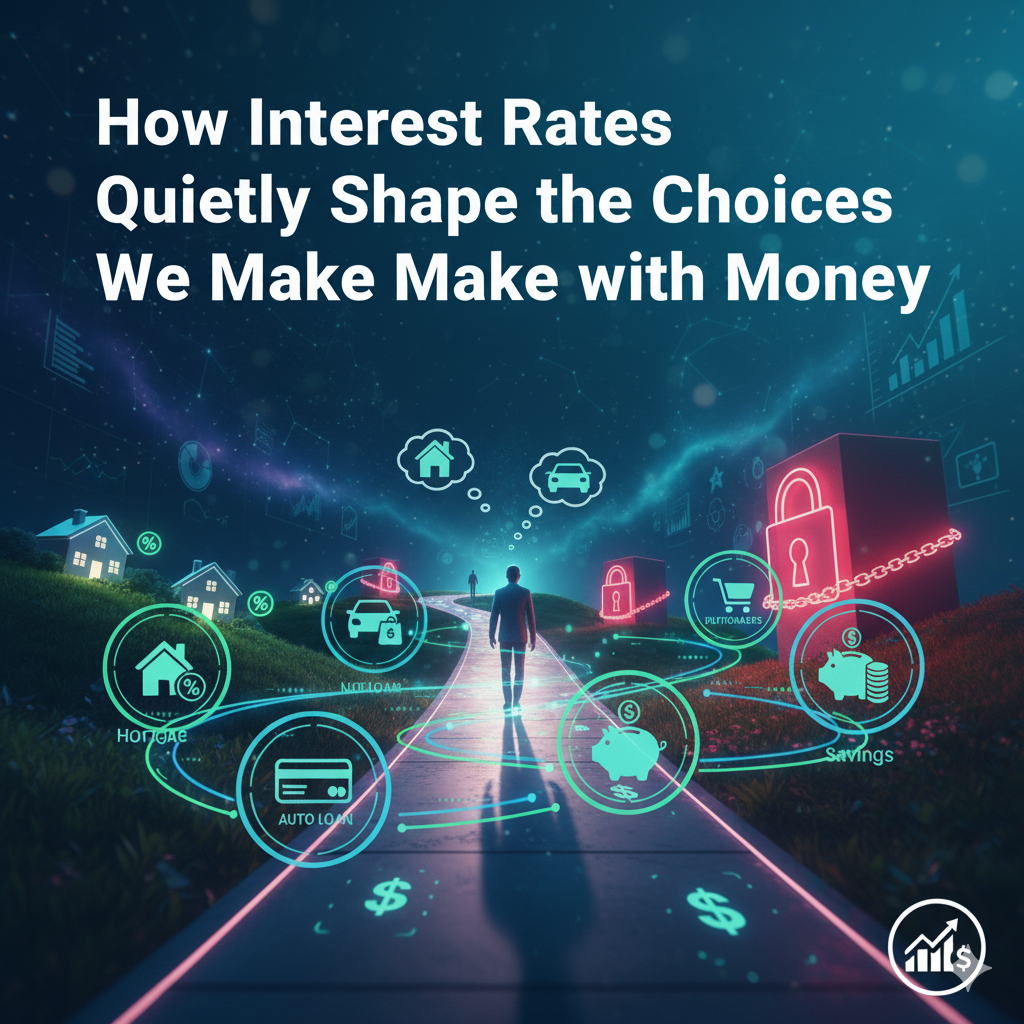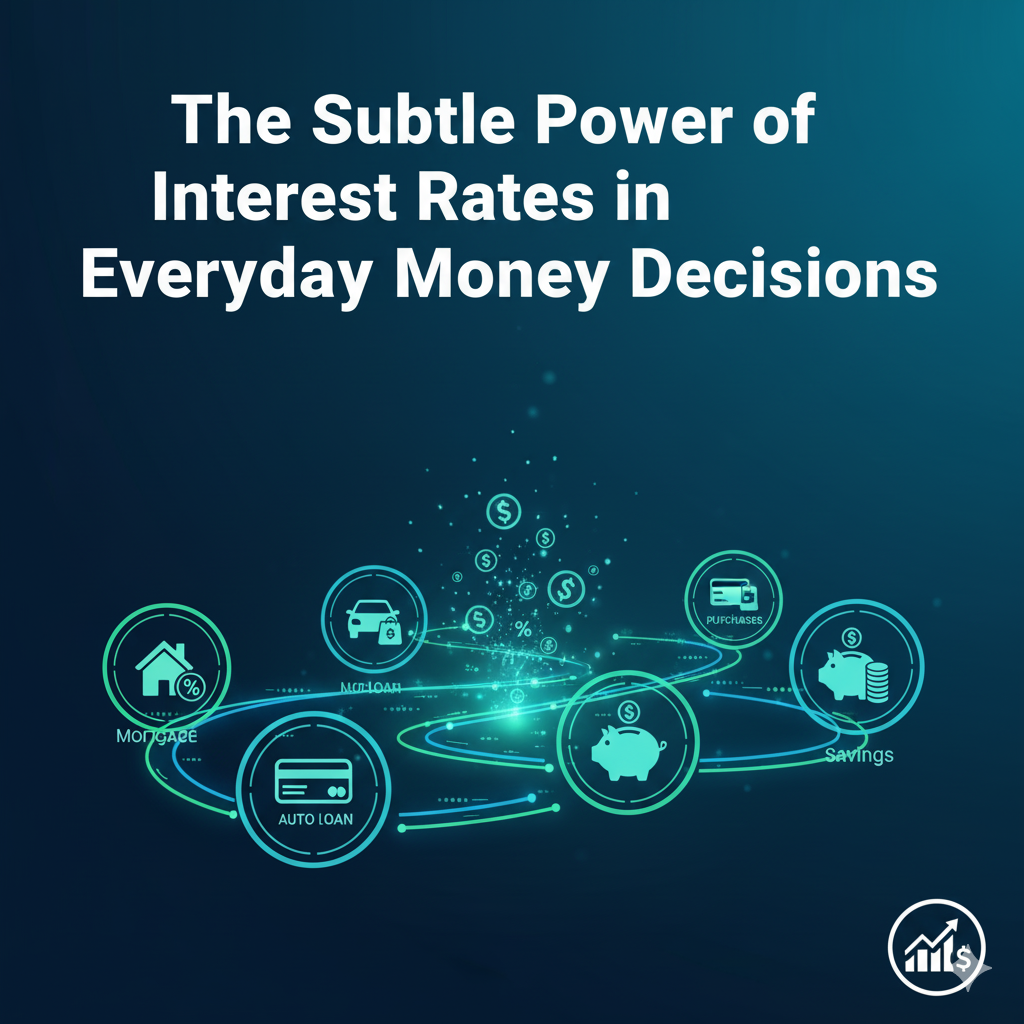
When most people hear the term “interest rate,” their mind immediately drifts to banks, loans, or perhaps the mortgage their neighbor constantly complains about, yet the truth is that interest rates shape almost every financial choice we make, often without us realizing it. Imagine standing in a grocery store with two different credit cards in your pocket. Both cards promise rewards, discounts, and flashy perks, but hidden behind the appealing offers is the quiet figure of the interest rate. Swipe too freely and carry an unpaid balance, and suddenly the rate becomes more important than the points earned on a new blender. This invisible number, decided somewhere far from the checkout counter, can ripple through your daily budget like a pebble tossed into a pond, expanding outward until you feel its full effect.
The role of interest rates becomes even clearer when you look at savings. Many of us recall childhood piggy banks, where coins made a satisfying clink, and the idea of money simply meant accumulation. But as soon as that money enters a savings account, it is no longer just about how much you put in—it’s about what the bank gives back. A high interest rate can feel like a reward for discipline, turning small deposits into larger sums over time, while a low rate can make the process feel stagnant, as though the effort is running in place. This difference changes how people think about saving: if returns feel worthwhile, they are more motivated to tuck money away regularly, but if not, the temptation to spend becomes harder to resist.
Borrowing tells another side of the story. A friend might rave about getting a new car, but what they rarely mention is how the monthly payment feels once the excitement of the purchase fades. A loan at a low rate can make the car feel affordable, while a higher rate can quickly transform joy into a financial burden. What’s fascinating is that these small percentage points, which seem insignificant on paper, can completely change the math of affordability. It is not about whether the borrower can pay this month, but whether they will still feel comfortable three years later when the novelty has worn off and the repayment routine is just another line in the household budget. Interest rates can decide whether that car represents freedom or frustration.
Yet interest rates are not just about what an individual chooses, they are about the collective mood of society. When rates rise, people often slow down their spending, feeling cautious about big commitments. Restaurants might seem quieter, vacations postponed, and impulse shopping replaced by careful consideration. When rates fall, the opposite often happens: new houses are bought, gadgets are upgraded, and families might plan trips they had been postponing. This is why interest rates are often described as the heartbeat of an economy—they keep time with the rhythm of spending and saving across millions of households, influencing not just bank statements but also the general sense of optimism or caution in everyday life.
Understanding interest rates also empowers individuals to negotiate better. Consider two people with the same salary walking into the same bank for a personal loan. One has done their homework, knows current market rates, and questions every figure the banker offers. The other simply nods along, accepting the first option presented. The first person may walk out with a rate that saves thousands over the life of the loan, while the second carries a heavier financial load without even realizing the difference. Knowledge becomes a form of currency here, because the awareness of how interest works allows someone to shape their own financial path rather than being passively carried by it.
Ultimately, the lesson is that interest rates are not abstract numbers tucked away in financial reports; they are everyday companions that whisper quietly behind every decision involving money. Whether it’s choosing between saving and spending, borrowing and repaying, or planning for today versus tomorrow, these rates shape the outcomes in ways most people only notice once the effect is already in motion. To treat interest rates as something distant is to ignore the steering wheel of your financial journey, but to pay attention is to discover a tool that can guide you toward stability and even opportunity. In the end, money is not just about how much you have, but about how well you understand the silent forces that act upon it, and interest rates remain one of the most powerful of those forces.